
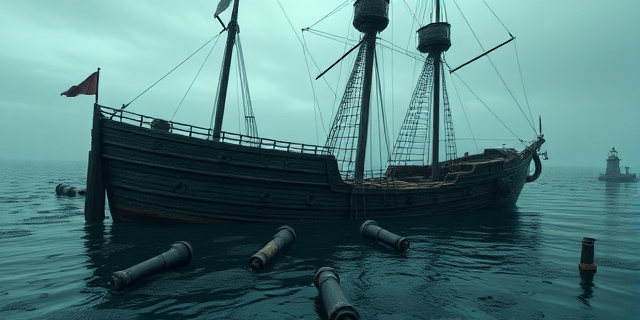
A 225‑year‑old ghost finally leans into the light. In the murky depths of Copenhagen Harbor, where the sea keeps its secrets like a stubborn roommate, a team of archaeologists has pulled a Danish warship out of its watery grave. The Dannebroge, a wooden leviathan that once boasted 357 souls on board, sank on 2 April 1801 after a brutal exchange of cannon fire with Vice Admiral Horatio Nelson’s fleet.
The clash, part of the Napoleonic ballet that saw Denmark try to hang a French flag while Britain swore on its own cannon‑laden honor, ended with 53 sailors lost and 19 forever missing – a casualty list that still makes the Danish navy’s ledger feel like a bad grocery receipt. The discovery came as part of a pre‑construction survey for a new artificial island.
While the planners were busy sketching a modern playground of concrete, the archaeologists were quietly mapping the sea floor, turning it into a treasure map. “We found a large shipwreck about 50 feet beneath the surface that matches the dimensions of the Dannebroge,” said Otto Uldum, the Viking Ship Museum’s lead excavator.
He added that tree rings dated the timbers to 1772, the year the ship was hoisted from the shipyard. The find is not just a relic; it’s a time capsule of a 19th‑century battle that still echoes in the minds of today’s politicians. The wreck sits like a broken piano beneath the water, with cannonballs scattered like broken dice and a couple of cannons still staring down at the sea.
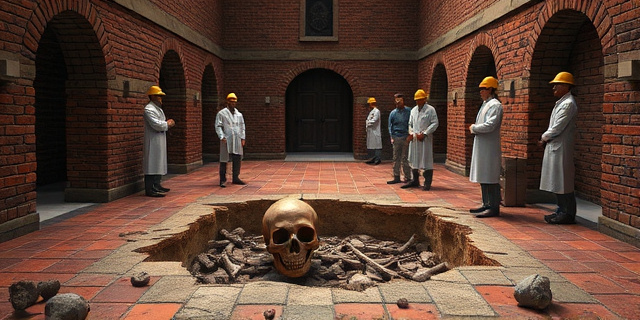
In the wreck’s shadow, bones – ribs and jaws – lay beside a pair of shoes and a metallic insignia, a small but potent reminder that the missing 19 may finally get a proper send‑off. The Viking Ship Museum’s Otto Uldum likened the discovery to finding a long‑lost relative’s diary: every shard of evidence, from a clay pipe to a uniform patch, tells a story that the official history books had left on the shelf. Nelson’s infamous “turn a blind eye” moment is still part of the lore, but the new evidence gives us a fresh lens: a warship that once stood in the line of defense now lies in the same harbor that builds the future.
The Dannebroge’s story is a reminder that even the most brutal battles leave behind a trail of tiny, human‑made items that can still be found, studied, and honored. In the end, the Dannebroge’s return is less about the heroic deeds of the past and more about the stubborn persistence of history – like a stubborn jar of jam that refuses to stay in the fridge, it finally finds its way back to the surface.
Crítica:
El artículo omite el contexto político que dio lugar al conflicto y se limita a la curiosidad arqueológica. La narrativa es más un relato de descubrimiento que un análisis crítico.





Comentarios